Engine 01 · Lead generation system
Sales Engine
One Notion page turns a city and a job title into 50 booked calls a month.
You have Notion. Your team does not open it. I fix that in 90 days, workshop by workshop, until Monday morning starts in one workspace instead of across 6 tabs and a Slack scroll.
No pitch · You keep the notes · Usually 2–3 calls a week
I build Notion workspaces your team uses on the Tuesday morning after the workshop, and on the Tuesday morning 6 months later. One engagement, one workspace, one opinionated build. What separates this from every other Notion consultant is the workshops. The people who will open the pages are in the room while the pages are built. That is the only reason adoption holds after I leave.
Takeaway: the hard part of a Notion workspace is not the databases. It is the shape of the work you put into them, and whether the team adopts it. Structure decides both.
A Notion workspace that lasts is an opinionated model of how your team actually operates. Most of the engagement goes into getting the model right, because the build itself is quick once the shape is clear. 3 months, in 3 chapters.
Month 1
Audit what you have, interview the team, find the shape of the work. Decide what lives in Notion, what stays elsewhere, and how the two talk.
Month 2
Workspace goes live page by page. Databases, views, automations, templates. Real data flows in. Workshops one and two ship during the build.
Month 3
Workshops 3 and 4 lock in the habits. Your team uses the workspace without me in the room. Handover doc, SOPs, a year of upgrades.
Takeaway: a workspace nobody opens is more expensive than no workspace at all. The workshops exist because adoption is the deliverable.
Templates you clone. Modules you compose. Both live in the library the day you install. Tap any card to see its full lifecycle and a mindmap of what it touches.
Start with a Template (2 to 3 days to live) or a Module (a reusable cluster your build plugs into). The block you pick is the shortest path from zero to a workspace your team opens on Monday.
Clone-and-go Notion shells. Fastest path from zero to live.
Reusable clusters. The Lego bricks every build is assembled from.
Takeaway: blocks give you a running start. Every template and module on this page is already in daily use in a client workspace.
Not just a Notion architect
Notion is not the thing I started with. Seven years wiring CRMs, LLMs, outbound tools and custom APIs together came first. Every automation and engine below carries that lineage. Notion is the interface. The plumbing is the craft.
Automations move work between modules without being asked. Engines turn a collection of blocks into a business spine. Open an engine card to see the full architecture map and tool flow.
Automations are cost-aware n8n plus Claude flows that run between your modules. Engines are full running systems, sales, content, project management, email, shipped as one coherent spine your team operates themselves.
n8n + Claude flows that move work between modules without asking.
Complete running systems. Hand-drawn architecture, full tool map, stage-by-stage journey.
Engine 01 · Lead generation system
One Notion page turns a city and a job title into 50 booked calls a month.
Engine 02 · Operations
Your PM tool stops being the second system your team ignores.
Engine 03 · Lifecycle marketing
Every signup gets the right 5 emails on the right 5 days without a marketer touching a thing.
Engine 04 · Content OS
One brief becomes 4 published assets without a content manager.
Takeaway: blocks give you a running start. Automations keep the blocks in sync. Engines are the complete build your team inherits.
Keep scrolling. Section 04 opens the toolbox and shows exactly how this is wired.
Seven years wiring CRMs, LLMs, outbound tools, and custom APIs together. I chose Notion because it is the one interface that actually holds a business without collapsing into a project-management app. Every tool below has already run in production on a real client build.
Hover any card below to see exactly what the numbers are made of. Which integrations, which n8n workflows, which self-hosted services. No more abstract claims.
Takeaway: the integration is rarely the hard part. Deciding which twenty percent of your stack belongs in Notion and which eighty stays in its home tool. That is the work.
Pick the team that sounds like yours. Each row shows the specific jobs the workspace is hired to do, with the numbers that say whether it is earning its seat.
Founders · What the workspace changes
“You don't need more tools. You need one that holds your whole business and a consultant who keeps it current.”
Agencies · What the workspace changes
“Agencies scale on systems, not headcount. The right Notion setup is the cheapest ops hire you will ever make.”
Coaches · What the workspace changes
“Coaching scales when the workspace does the memory work. You focus on the human conversation.”
SaaS teams · What the workspace changes
“Your product team is as fast as your knowledge retrieval. Notion done well is a compounding asset.”
Studios · What the workspace changes
“Creative work stays creative. The admin work becomes a Notion template that the studio operates itself.”
A 30-minute call. We audit your current stack, identify the three workflows costing you the most time, and agree on what we build first.
Month 1 builds the workspace. Month 2 wires the integrations (Fireflies, Claude, n8n, your existing tools). Month 3 polishes, documents, and hardens.
Four live sessions with your team. Not recorded loom. Your workspace, your workflows, your questions. This is why the builds stick.
Twelve months of free template upgrades, walkthroughs, and rebuilds as Notion ships new features. Your setup stops freezing on last year's features.
A small sample of LearnFast engagements. Every workspace below is in daily use, not a prototype that never went live.
 Cornell CAIO
Professional services
Project hub, LinkedIn outreach pipeline, content engine, ideal-customer-profile segmentation by region. One Notion workspace replaced six tools. Two paying clients landed from one LinkedIn thread.
Tap to open
Coaching
ScoreApp quiz funnel, four-message outreach sequence, cold email to 1,200 prospects, Webflow-to-Claude content editing. First cohort filled in four weeks.
Tap to open
Nonprofit
Full recruitment funnel in Notion: lead capture database, qualification scoring, AI-personalised outreach drafts, email campaigns. Volunteer-run, no full-time marketing staff required.
Tap to open
Multi-tenant SaaS
Vendor onboarding automation, multi-tenant CRM (customer relationship management), GPS integration, admin dashboards. Three apps (customer, vendor, admin) running on a shared Notion backbone.
Tap to open
Agency ops
Existing CRM → Notion sync, every Google Meet → tasks in project tracker, Slack summaries before the coffee finishes brewing. Friday pipeline review: 45 min → 5 min.
Tap to open
AI ops
Eight AI agents orchestrated across four model providers. 120+ skills automated. Sales, marketing, engineering, QA, docs, and DevOps all running from one Notion workspace.
Tap to open
Quotes from clients with active NDAs. Named references available on request.
“Nandesh rebuilt our team's Notion from scratch. It is the first system our team has actually stuck with. Six months in they still extend it themselves, which is the part I did not believe would happen.”
“The four workshops are the difference. Other Notion consultants build you a pretty workspace and leave. Nandesh trained my team so they own it. I stopped being the single point of failure inside the system I paid for.”
“Three Notion consultants before him. Two built pretty templates nobody opened. One disappeared mid-project. This one kept showing up as Notion shipped new features, so our workspace is not frozen in last year.”
“Our customer onboarding flow lives in Notion now. Sales hands off, customer success picks up, nothing falls through. First-90-day churn dropped by more than a third and I can point at the Monday dashboard that proves it.”
One builder, not six. One tier that fits your scope. Twelve months of ongoing upgrades as the agent ecosystem ships new tools. Toggle the blocks below to see the math shift live.
Why this offer exists
The build takes a few weeks. The year after the build is where the offer lives. Every new tool, every new pattern, every rule change in the agent world lands on your workspace the week I learn it, because teaching it to you is how I keep learning it myself.
Where I am right now
01
Quiz
5 questions about your team, your biggest time-sink, and your growth goal. Two minutes.
02
Diagnosis
See the 4 blocks that match your answers, pre-selected and ready to adjust.
03
Price it live
Toggle items on or off. The specialist comparison and your flat fee update as you build.
Where these specialist rates come from
Hourly rates are the April 2026 average from the official Notion Consulting Partners directory and the top-rated Notion consultants on Upwork and ZipRecruiter. The reason one builder ships this under a flat fee is simple: I run the Notion architecture, the n8n automation, and the prompt engineering myself, so you do not pay the coordination overhead of three separate specialists passing a brief between them.
Your cart
0 blocks selected. Nothing added yet.
You pay
$0
Pick any template, module, automation, or engine from the catalog. The flat fee locks in the moment you add your first block.
Launch bonuses
Every booking this month also unlocks the launch freebies in the banner above, worth thousands extra on top of your build.
Build your stack
Template
Every Fireflies transcript becomes a Notion page with decisions, owners, and dates. No more catch-up threads.
Market rate
$400
You pay
$200
Template
One brief, many platforms. Ship the same campaign across LinkedIn, X, newsletter and YouTube from a single Notion page.
Market rate
$500
You pay
$200
Template
One page your CEO opens every Monday. Pipeline, shipped-this-week, blocked, decisions, all rolled up from the databases your team already uses.
Market rate
$500
You pay
$200
Template
White-label portal per client. Live progress, shipped deliverables, running decisions. Status emails drop to zero.
Market rate
$500
You pay
$200
Template
A real CRM in Notion for pre-enterprise teams. Lead capture, scoring, next action, relationships - before a dedicated CRM is justified.
Market rate
$550
You pay
$200
Template
Role-based week-one path through the company brain. New hires walk themselves in. Old hires stay current.
Market rate
$500
You pay
$200
Two-layer Adoption Guarantee
End of month one, not worth every hour your team has put in? Full refund, no questions. Past that, if the workspace is not your team’s daily source of truth by day 90, Nandesh keeps working free until it is.
Honest capacity
3 new clients per quarter. Solo operator. That’s a real limit, not fake urgency.
30 minutes · No pitch · You keep the notes
The experience, one client at a time
Daily Slack updates landed before I thought to ask. I never had to chase a status or a screen share. The engagement felt like a teammate, not a vendor.
Four workshops did more than a month of YouTube. By week six my team was extending the workspace without pinging me. That was the unlock.
Six months post-handover and the skill library keeps growing. New flows drop in every time I open it. The 12-month ongoing window paid for itself twice over.
Halfway through our build I asked where a specific schema pattern came from. Turns out he had picked it up in his Cornell cohort that same week and just dropped it straight in. I had not even heard of it yet. That kept happening.
I used to build teams. Now I build AI systems that feel like one.
Quick intro in case we have not met. I am Nandesh Goudar, founder of LearnFast, and the short version is this: most teams I meet can out-think their competitors any day of the week; they just cannot out-learn them. New tool, new playbook, new hire, new market - the training sticks for about a week and then quietly evaporates. The knowledge lives in a few people’s heads until those people leave. Competitors who compound faster keep pulling away.
I work on that specific gap because learning unfamiliar things fast was literally my job for a long time. Teams I tried to lead and failed with. Campaigns that missed the audience I thought I understood. Freelance engagements where I was hired for marketing and had to pick up SQL mid project, or hired for ops and ended up owning paid ads by week three because the client stack did not match the brief. Every one of those was a crash course in picking up a new system fast enough to ship by Friday.
Now I put that same learning by shipping loop inside companies, using Notion as the surface and AI as the invisible coworker. Onboarding drops from months to weeks. Tool adoption drops from weeks to days. Team knowledge stops depending on who stays late. The competitive edge becomes speed of adaptation itself. That is the bet this practice is built on.
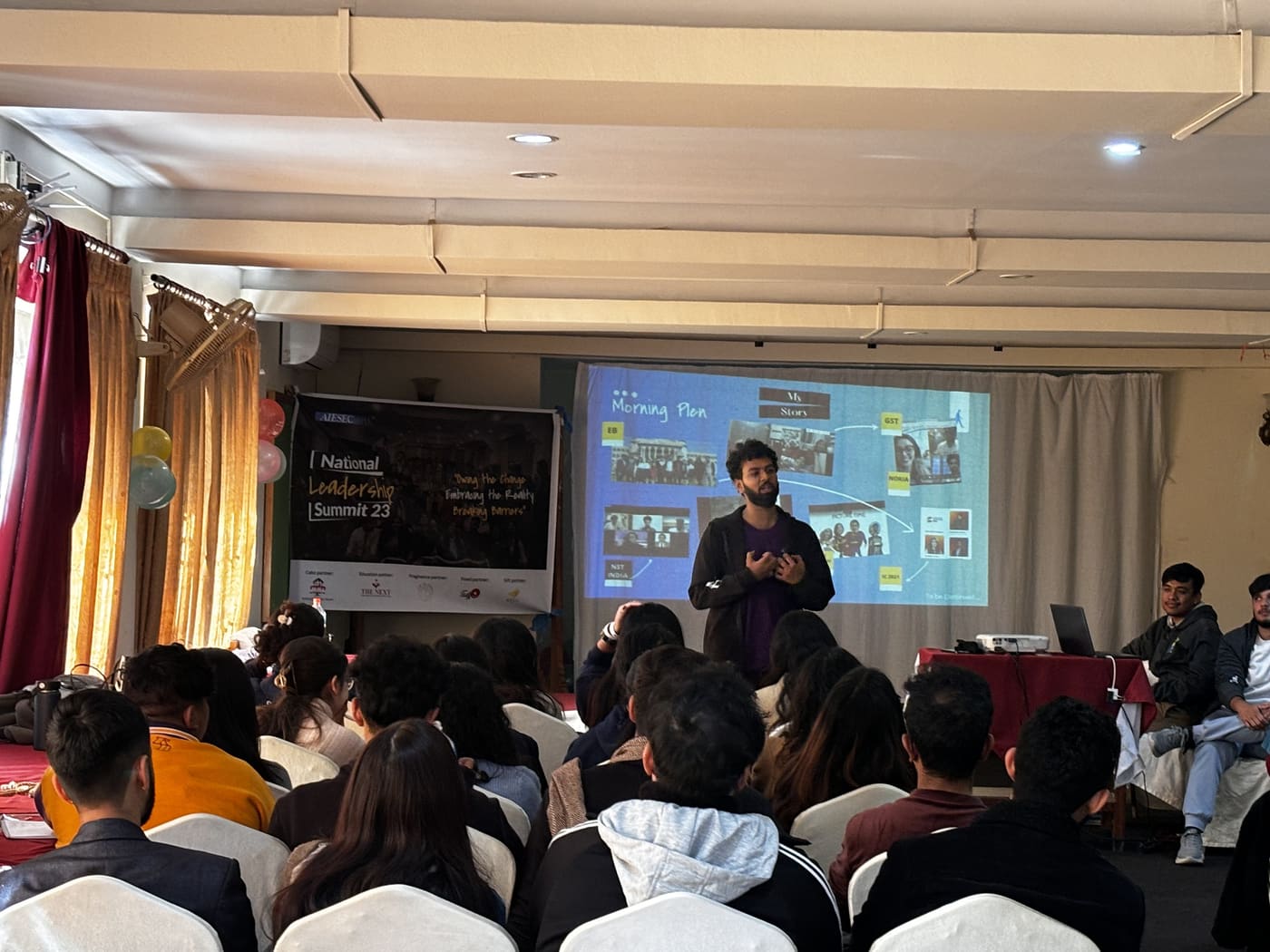
The operator reps came at national scale through two elected CEO terms running business operations in Albania and then New Zealand, and as Programme Director for the Asia Pacific Summit in Nepal. Those years were running sales pipelines, monthly financial close, program P and Ls, team KPIs, and onboarding cohorts of new hires every semester. All of that was before Notion. Everything I do now is what I wish I had back then, which is why every LearnFast build ships with four live workshops, not a recorded Loom.
The Notion work came later. Seven years in applied AI, three Notion badges (Essentials, Workflows, and Advanced), currently enrolled in the Cornell Chief AI Officer cohort, and a conviction that most business software is doing the wrong thing well. I picked Notion because it is the one interface where the workshop can land on a Tuesday and still be load bearing on the Tuesday six months after.
Personal philosophy
The industry is racing to automate humans out of their own jobs. I think that road ends badly for everyone, including the companies running down it. The status updates, catch-up threads, and copy-paste-between-tools work your team does all day is not the work they are paid for. It is the work that is in their way.
Every Notion workspace I ship is built so the AI disappears into the background. Your team stops writing status emails because the workspace writes them. They stop hunting for the last version of a doc because everything lives in one place. What is left on their calendar is the work only a human can do: strategy, judgement, creative direction, the difficult conversation.
My goal is a workspace that gives your team enough visibility and enough time back to go explore their wildest hobbies on a Friday afternoon and still be on track for Monday. Human and AI, sitting next to each other, both doing what they are actually good at. Co-existence, not replacement.
“If your team still opens Slack first on a Monday, the workspace is not done yet. The workshop is not done yet. I am not done yet.”Notion · 3 official badges7 yrs applied AICornell CAIO · currently enrolledAIESEC CEO × 240+ integrations shippedLinkedIn ↗
One opinionated Notion workspace built for your team, 4 live workshops with your real data (recorded), all SOPs and a handover doc, and 12 months of free template upgrades so the workspace stays current as Notion ships new features. $5,000, fixed. No per-seat, no retainer, no surprise invoices.
3 months from kickoff to a workspace your team is using without me in the room. Month 1 maps the work. Month 2 builds and goes live. Month 3 locks in adoption with the final 2 workshops. The timeline is fixed because the build is fixed.
Notion ships new features constantly. For 12 months after launch, every template upgrade triggered by a new Notion feature is free. If Notion releases something that would make your workspace better, you get it without a change order.
Yes, and usually that is where we start. Month one audits what you already have, keeps what is working, and rebuilds the rest around a model that matches how your team actually operates. Existing pages are migrated, not abandoned.
Training is the engagement. 4 live workshops with your team, using your real data, recorded so new hires can watch later. A workspace nobody opens is more expensive than no workspace at all, so adoption is treated as the deliverable.
Nandesh Goudar, end to end. Certified by Notion across 3 programs. Cornell Chief of AI cohort. 7 years in applied AI. One consultant, one workspace, one engagement. You are not handed off to a junior after the first call.
I will tell you on the walkthrough. The walkthrough is 30 minutes, free, no pitch. If your problem lives somewhere other than Notion, you leave with that answer and no invoice.
Question not answered here? The fastest way to get a straight answer is a 30-minute call.
Ask it on a 30-min call→Left: the Monday before you call. Right: the Monday 90 days after handover. Same team, same calendar, different week shape.
Monday, before
The cost of doing nothing compounds.
Monday, 90 days in
Your six tabs collapse into one page. Your best hire stays.
30 minutes · No pitch · You keep the notes
For the reader who made it this far
Readers like you often find what I am about to share more intriguing than all the buzzwords and technical jargon you have seen above. This section is about why I am doing what I am doing, and what I am still figuring out. The other half of the brain. Some parts of my thought space.
The videos below are the closest thing I have to a reading list for the way I think. Each one shaped a chunk of how I now build workspaces and how I pick which problems are worth a three-month build.
Three videos. Three bets on the next decade. I revisit these whenever I am building anything that is supposed to last longer than a sprint.
Nandesh’s notes
This is the video I send to anyone who asks me what I actually do. I am an M-shaped professional. Polymath on paper, operator in practice. That is how I ended up stacking roles across automation, sales engineering, marketing, and product work inside very different companies.
Freelancing was the perfect vehicle for that shape. It let me take on the work that was under-automated in each company and leave once the system was handed off. But the constant new-context load burns you out if you do not stop and consolidate.
Three months in Thailand is that consolidation. I went back through every client build I shipped and turned the wins into reusable workflows and Notion templates. The M-shape stays, but now every point on the M is load-bearing for future work instead of a one-off.
Nandesh’s notes
The 2026 documentary that got every frontier-lab CEO on camera at the same time. Sam Altman, Dario Amodei, Demis Hassabis, Jan Leike, Ilya Sutskever, all asked the same blunt question: what kind of world are we building for our kids. No one walks away with a clean answer. That is the honest part.
I sit on the other side of that question every day. I am not training frontier models, I am wiring them into how small teams actually work. The film reframed it for me. The bet is not whether AGI arrives. The bet is whether the average team, using today's tools, can hold onto the part of the work only a human can do.
Nandesh’s notes
This is the documentary I keep coming back to whenever a client asks me "is AI actually useful or is it just hype?" AlphaGo was not a chatbot. AlphaFold was not a chatbot. They were narrow, deeply-trained systems pointed at a specific, valuable problem. Game with perfect information. Protein folding with 50 years of biology backing it.
That is the lesson I carry into every Notion build. The wins come from pointing AI at one workflow your team does every week and taking the chore out of it. Not "an AI agent runs your whole business." A Fireflies transcript becomes a Notion page with decisions and tasks. A form submission becomes a qualified lead with a scored ICP fit. A client intake becomes a portal.
If you are not sure yet
Workflows are the easy part. Where we are actually headed is the harder question, and I genuinely enjoy spending time with people sitting with that one. Let’s figure out your why. No pitch, no sales, no Fireflies, no notetaker. Human to human. Bring the coffee.
No pitch · No sales · Human to human
30 minutes. No pitch. I look at your current setup and tell you what I would change first, whether or not you ever hire me. You walk away with the notes either way.
Free · 30 minutes · No pitch · You keep the notes